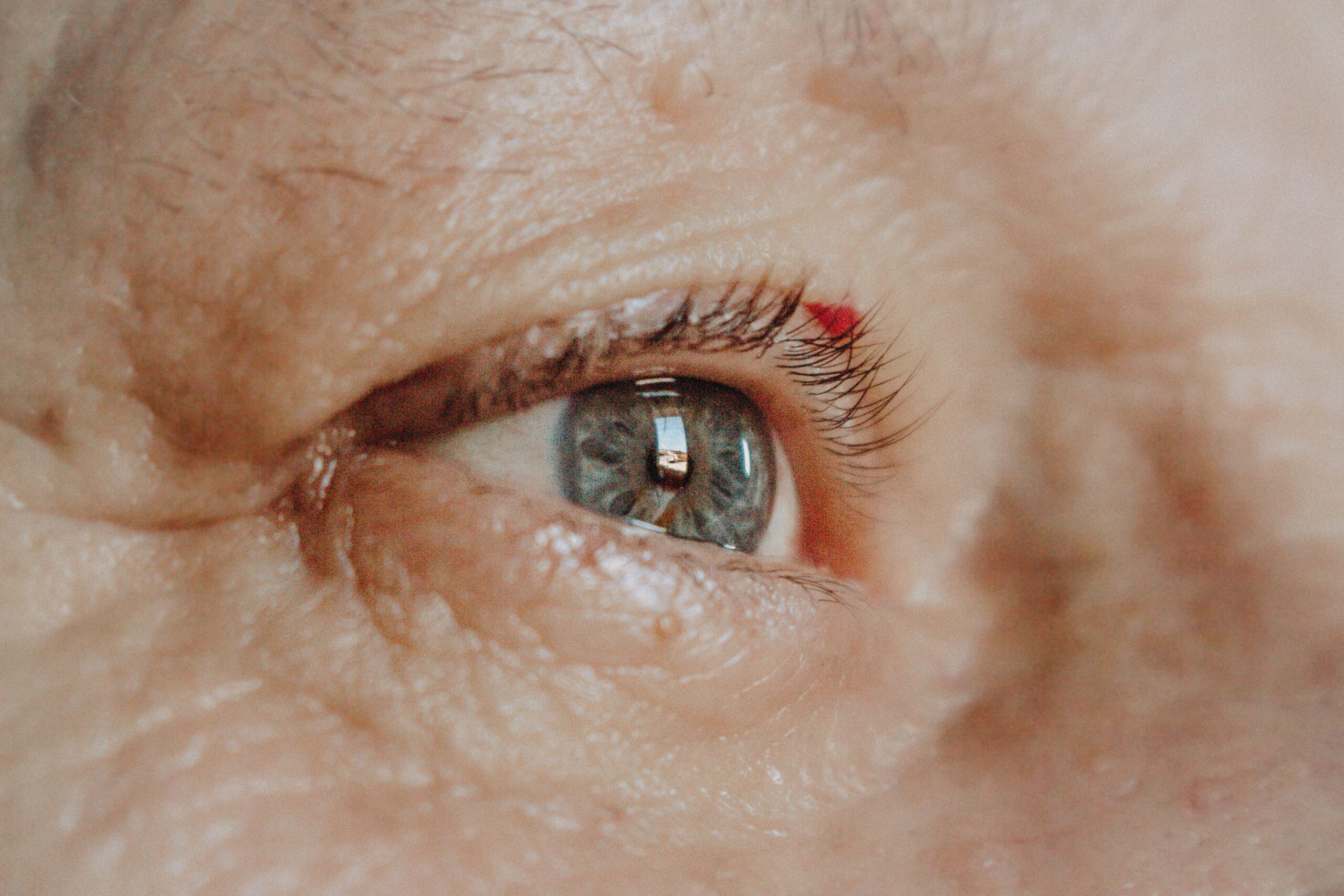


A drooping eyelid is easy to dismiss as a cosmetic concern or a normal sign of aging. But depending on the cause and severity, ptosis (the medical term for a drooping upper eyelid) can do more than change your appearance. It can mean compensatory behaviors meaningfully interfere with your vision, strain the muscles around your eyes and neck, and in some cases, signal an underlying condition that requires prompt medical attention.
What Ptosis Is
The American Academy of Ophthalmology describes ptosis as a condition where the upper eyelid droops over the eye, sometimes just slightly, sometimes enough to cover the pupil entirely and block normal vision. Ptosis can limit or even completely block normal vision, and it can affect both children and adults.
The degree of drooping matters. Ptosis may be minimal (1-2 mm), moderate (3-4 mm), or severe, covering the pupil entirely. Mild drooping may cause no functional vision problems at all. Moderate to severe cases are a different matter.
How a Drooping Eyelid Affects Vision
The most direct effect is obstruction. When the upper eyelid descends far enough to encroach on the pupil, it physically limits how much light enters the eye and narrows the visual field, particularly in the upper portion. When ptosis limits your vision, reading, playing, driving, and even walking can become difficult.
But the vision effects of ptosis extend beyond the obvious. Many people with drooping eyelids develop compensatory habits without realizing it.
If ptosis covers your pupil and limits your vision, you may unconsciously try to compensate by raising your eyebrows. This can cause tension headaches and give your eyes an odd, surprised appearance. You may also tilt your chin up and look down your nose as a way of seeing out from under your eyelid’s lower margin.
These adaptations are the body’s way of working around the obstruction, but they come with their own consequences. Chronic eyebrow elevation strains the frontalis muscle. Patients often describe persistent fatigue around the eyes and forehead without connecting it to their eyelids. Harvard Health notes that the chin-up posture many ptosis patients adopt can also affect the head and neck over time.
Ptosis in Children is A More Urgent Concern
In adults, ptosis that doesn’t obstruct the pupil is rarely an emergency. In children, the calculus is different. The most common cause of congenital ptosis is the levator muscle not developing properly. Children with ptosis whose eyelids droop low enough may develop amblyopia, commonly known as lazy eye.
If severe enough and left untreated, the drooping eyelid can cause other conditions such as amblyopia or astigmatism, so it is especially important to treat the disorder in children before it can interfere with vision development.
The critical window for visual development closes around age 7-8. The Cleveland Clinic notes that eyelid drooping that obstructs a child’s visual axis during those years can cause permanent vision impairment in the affected eye, even after the lid position is eventually corrected. This is why early evaluation matters so much in pediatric cases. A child with ptosis may tip their head back, lift their chin, or raise their eyebrows to try to see better, behaviors that parents sometimes notice before the ptosis itself is obvious.
What Causes Ptosis
Ptosis is not a single condition. It has several distinct causes, and identifying the right one determines both how it’s managed and how urgently.
Age-related (aponeurotic) ptosis is the most common form in adults. The levator aponeurosis, the tendon connecting the lifting muscle to the eyelid, stretches or detaches over time. This type develops gradually and is usually benign, though it can still affect vision as it progresses.
Congenital ptosis is present from birth, caused by incomplete development of the levator muscle. As noted above, prompt evaluation is important in children.
Neurogenic ptosis develops when the nerve supply to the eyelid is disrupted. Ptosis can be a sign of a serious underlying neurologic condition, such as Horner syndrome, third cranial nerve palsy, or myasthenia gravis. This category warrants particular attention.
Mechanical ptosis occurs when the eyelid is physically weighed down or restricted, such as by a cyst, tumor, or significant swelling.
Traumatic ptosis can follow injury to the eyelid or levator muscle, or develop after certain eye surgeries.
When Ptosis Is a Red Flag
Most ptosis is benign. But certain presentations require urgent evaluation rather than a routine appointment.
Acute onset ptosis accompanied by headache, pupillary abnormalities, or extraocular motility deficits raises concern for compressive oculomotor nerve palsy, often secondary to an aneurysm, and requires urgent neurovascular imaging. Fluctuating or fatigable ptosis with diurnal variation suggests ocular myasthenia gravis and requires urgent neurovascular imaging, according to StatPearls via the National Institutes of Health.
If a drooping eyelid appears suddenly rather than gradually, or comes alongside any of the following, seek care the same day:
- A headache, particularly severe or sudden
- One pupil that is larger or smaller than the other
- Double vision
- Difficulty moving the eye in any direction
- Weakness in the arms, legs, or face
- Difficulty swallowing or speaking
Although the vast majority of ptosis is of benign etiology, eyelid or orbital malignancy, Horner syndrome, third cranial nerve palsy, myasthenia gravis, and chronic progressive external ophthalmoplegia must be ruled out in every case. A thorough eye examination, including evaluation of pupil size, eye movement, and levator muscle function, is the starting point for distinguishing these causes.
What Can Be Done For Drooping Eyelids
Treatment depends entirely on the underlying cause and the degree of functional impairment. When an underlying systemic condition is responsible, addressing that condition is the priority. For age-related or congenital ptosis that affects vision or causes significant compensatory strain, surgical correction is typically the most effective option.
Our eyelid surgery post covers the surgical process in detail. For patients who want to understand the full range of oculoplastic treatment options, our oculoplastic services page outlines what the fellowship-trained surgeons at Horizon Eye Care offer.
If you’ve noticed gradual eyelid drooping, or if a family member is showing signs of ptosis, a comprehensive eye exam is the right place to start. What looks like a minor cosmetic issue deserves a proper evaluation, both to protect your vision and to rule out anything more serious.