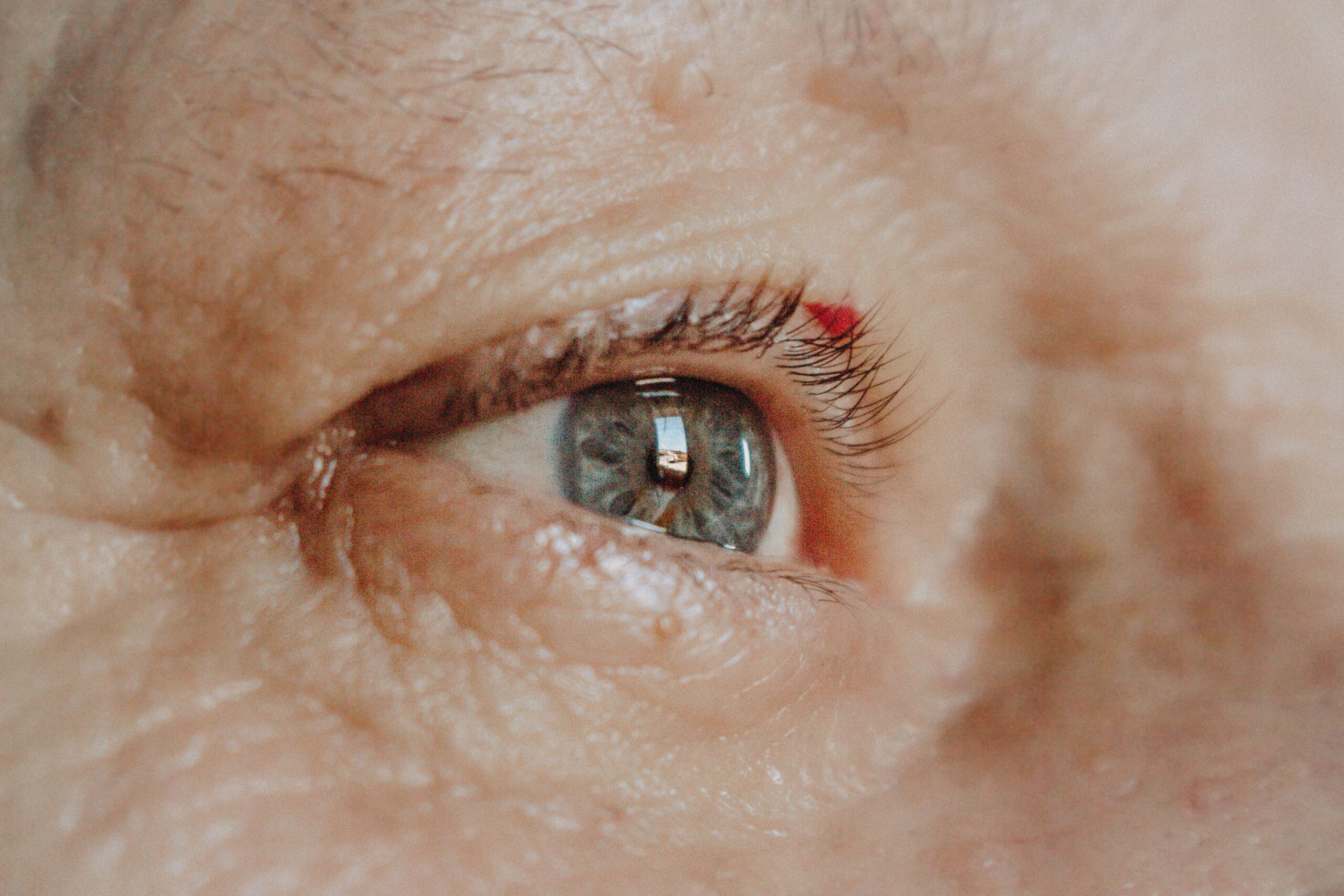


You blink. You look again. Something drifts across your field of vision: a tiny speck, a squiggly line, a shadow that moves when you do. Or maybe you saw a flash of light at the edge of your vision, like a camera going off in a dark room. Most people experience something like this at some point in their lives, and most of the time it is nothing serious. But sometimes it is. Knowing the difference could protect your sight.
What Are Eye Floaters?
Floaters are small shapes that appear to drift through your field of vision. They can look like dots, squiggly lines, cobwebs, rings, or shadowy blobs. The key characteristic: they move when your eye moves, then drift slowly when you stop.
Floaters are not actually floating on the surface of your eye. They originate inside the vitreous, the clear, gel-like substance that fills the back portion of your eye. As we age, the vitreous gradually liquefies and can develop small clumps of collagen fibers. These clumps cast shadows on the retina, and those shadows are what you perceive as floaters.
Floaters are extremely common. Most people develop them at some point, and the likelihood increases with age. Nearsighted individuals tend to notice them earlier. They are also more common during or after pregnancy and following cataract surgery.
What Are Eye Flashes?
Flashes of light in vision, called photopsia, occur when the retina is stimulated mechanically rather than by actual light. They often appear as brief streaks, arcs, or flickering lights, typically at the edge of your field of vision. Unlike floaters, flashes do not drift, they appear and disappear quickly.
The most common cause is the vitreous tugging on the retina. As the vitreous shrinks and pulls away from the retina, a normal process called posterior vitreous detachment (PVD), it can tug on retinal tissue and trigger a perception of light. Migraines can also cause visual disturbances that include shimmering zigzag lines, but these usually affect both eyes simultaneously and are accompanied by a characteristic aura.
When Are They Normal, and When Are They Not?
Here is where it gets important. Most floaters and occasional flashes are benign, especially if you have had them for a while and they are not changing. But certain changes in your symptoms can signal a serious problem requiring prompt evaluation.
Contact us immediately if you notice:
- A sudden increase in the number of floaters
- New flashes of light, especially if they are frequent or persistent
- A dark curtain, shadow, or veil appearing in part of your visual field
- A sudden loss of peripheral or central vision
These symptoms can indicate a retinal tear or retinal detachment, both of which are sight-threatening emergencies. A retinal tear that goes untreated can progress to a full detachment. Once the retina detaches, the window for preserving vision narrows quickly.
FAQs
What Causes a Sudden Increase in Floaters?
A sudden shower of new floaters, sometimes described as hundreds of tiny dots or a dark cloud, often signals that a blood vessel has broken or that the vitreous has detached abruptly and more dramatically than usual. When PVD occurs, it is sometimes accompanied by a small amount of bleeding that looks like a swarm of floaters.
This is not something to monitor at home. A same-day evaluation by an eye care provider is warranted.
How Are Floaters and Flashes Diagnosed?
Diagnosis begins with a dilated eye exam. Your eye doctor will widen your pupils using special drops, then use a bright light and magnifying lenses to examine the retina and vitreous thoroughly. In some cases, imaging such as optical coherence tomography (OCT) or ultrasound may be used to get a better view of the back of the eye.
Can Floaters Be Treated?
Most floaters do not require treatment. Over time, they tend to settle below the line of sight and become less noticeable, though they rarely disappear completely. For floaters that significantly impair quality of life, two treatment options exist:
- Laser vitreolysis, which uses a laser to break up floaters into smaller, less noticeable pieces
- Vitrectomy, a surgical procedure to remove the vitreous entirely, which also eliminates the floaters within it
Both procedures carry risks, so they are typically reserved for cases where floaters are significantly affecting daily function. Your physician will help you weigh the options based on your specific situation.
The Bottom Line
Floaters and flashes are a normal part of how eyes age, but they are not always harmless. Longstanding, stable floaters with no accompanying symptoms are usually not cause for concern. A sudden change in your floaters, new flashes of light, or any loss of vision is a different matter entirely.
If you are experiencing new or changing visual symptoms, do not wait. Early evaluation gives your eye doctor the best opportunity to protect your vision before a minor issue becomes a serious one.
Schedule an appointment at any of our seven Charlotte-area locations or call us at 704-365-0555.