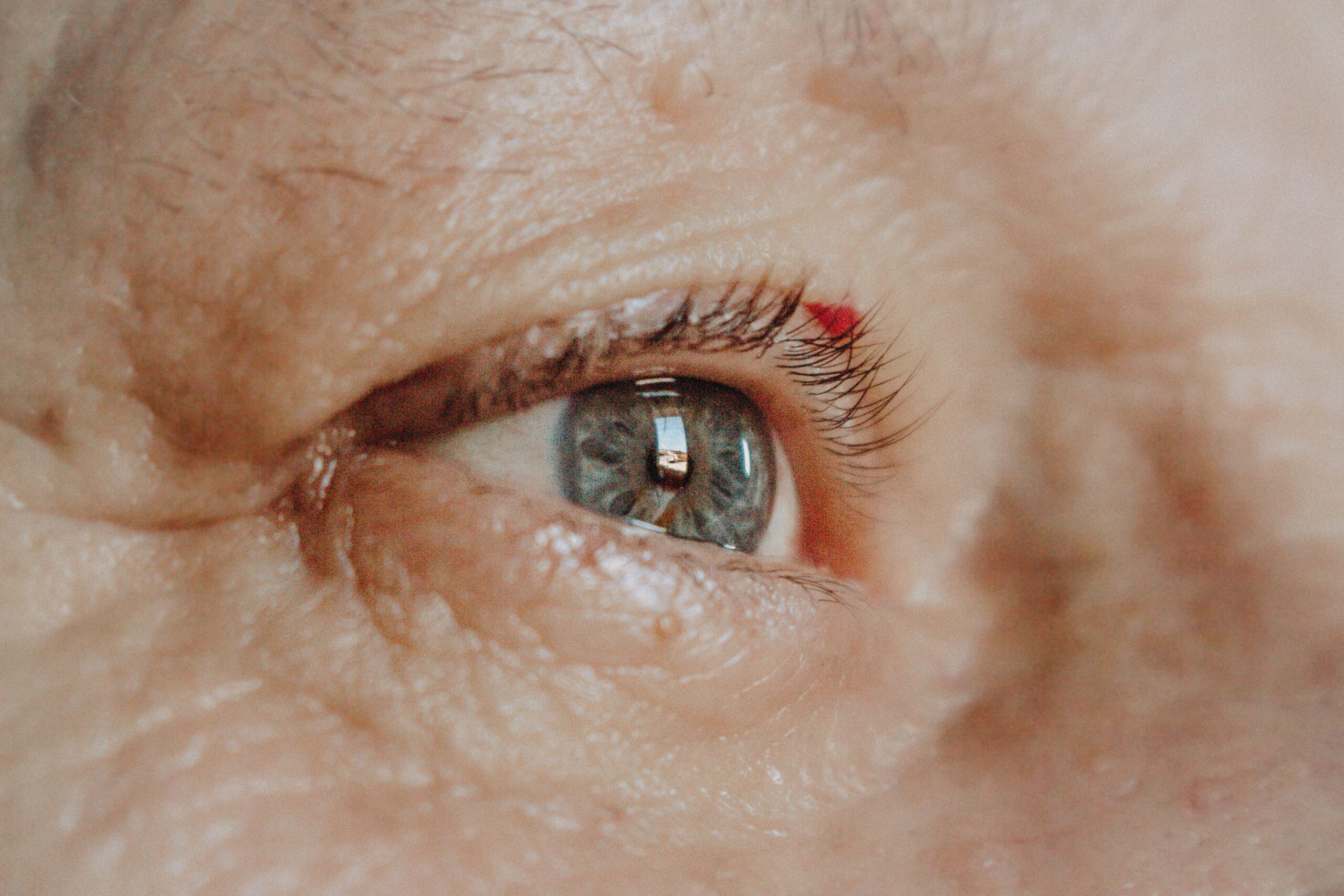
Stargardt disease is a rare inherited disorder of the retina that causes vision to decline over time. It usually shows up in childhood or young adulthood, and it takes central vision first while generally leaving peripheral vision intact. That combination shapes almost everything about living with it. Reading and faces get hard. Crossing a familiar room usually doesn’t.
Understanding Stargardt Disease
The cause is a mutation in the ABCA4 gene. That mutation allows a toxic byproduct to build up in the retina, and over years it damages the photoreceptor cells that do the seeing. Sharp central vision goes first, which is why reading, recognizing faces, and driving are usually the first things to become difficult.
What patients notice varies. Blurred or distorted central vision is the common thread. Blind spots appear. Low light and bright light both become harder to handle, and the eye takes longer to adjust when lighting changes.
How quickly it progresses, and how far, differs from person to person. Complete blindness is uncommon, because peripheral vision usually remains.
Coping with Vision Loss
Adapting Daily Activities
Most of the adaptation is unglamorous and specific. Handheld and digital magnifiers handle reading and close detail work, and a phone’s zoom does more than people expect it to. Screen readers, voice-to-text, and an assistant like Alexa or Siri take over messaging, reminders, and searching. Two settings changes go a long way too: high contrast on every screen you use, and better, more even lighting in the rooms where you spend your time.
Mobility and Orientation
Unfamiliar places are harder than familiar ones, and there is a well-established toolkit for that. Orientation and mobility specialists teach techniques for moving through public spaces safely. Navigation apps built for low vision, like BlindSquare and Seeing AI, help with somewhere new. Some people use a cane or a guide dog for added confidence and safety.
Emotional Resilience
Adjusting to gradual vision loss is hard in a way that sits apart from the practical problems, and it’s worth treating as its own thing rather than as something that resolves once the magnifiers arrive.
Talking to other people who have Stargardt disease does two things at once: it helps on the emotional side, and it’s where the practical workarounds get passed around. The Foundation Fighting Blindness runs and points toward groups like these. Professional counseling is worth considering as well, particularly in the first year, when the diagnosis is still settling.
The third piece is harder to hand someone a tool for. Where attention goes matters, and staying oriented toward what still works is easier to live inside than keeping a running tally of what doesn’t.
Educational and Career Success
Accommodations in Education
The list of accommodations to ask for is short, and schools are used to providing them. Text-to-speech software, electronic textbooks, and enlarged print handle most of the reading load. Extra time on reading and testing accounts for how much longer the same work takes. Lecture notes in digital or audio form are far easier to use than a printed handout.
Pursuing Careers
Stargardt disease doesn’t decide what career you get to have. Vocational Rehabilitation Services and similar organizations provide training and job placement support for people with visual impairments, and they understand the employer side of the conversation. Employers can generally accommodate with adaptive technology, a reshuffle of which tasks sit with whom, or a more flexible workspace.
Maintaining Health and Vision
Protecting the Eyes
No cure exists yet. Several things are still worth doing to protect the vision that remains. Sunglasses with UV filters are the clearest of them, since UV exposure adds retinal damage on top of what the disease is already doing. Cutting screen time and using blue light-blocking glasses may help with eye strain. A diet built around leafy greens, omega-3 fatty acids, and antioxidants supports eye health generally.
Regular Monitoring
Routine eye exams do two jobs. They track how the disease is moving, and they keep you in the loop on treatments and clinical trials as those open up.
Advancements in Research and Treatment
Three lines of research are active. Gene therapy aims to correct the ABCA4 mutation in the retina and halt or reverse the damage. Stem cell work is trying to regenerate damaged retinal cells. Drug development is focused on slowing the accumulation of the toxic byproduct that drives the disease in the first place.
None of the three is standard treatment yet. Clinical trials are how patients get early access to any of it, and they’re worth asking your retina specialist about by name.
Thriving with Stargardt Disease
Living with Stargardt disease takes adaptation. It doesn’t decide what the rest of a life looks like.
Getting the tools early, finding other people who have it, and keeping current on what’s in trials are the three things most within a patient’s control. The rest is a matter of working out which specific adjustments fit your specific days, and that takes time.
To schedule a consultation with one of the retina specialists at Horizon Eye Care, call 704-365-0555.