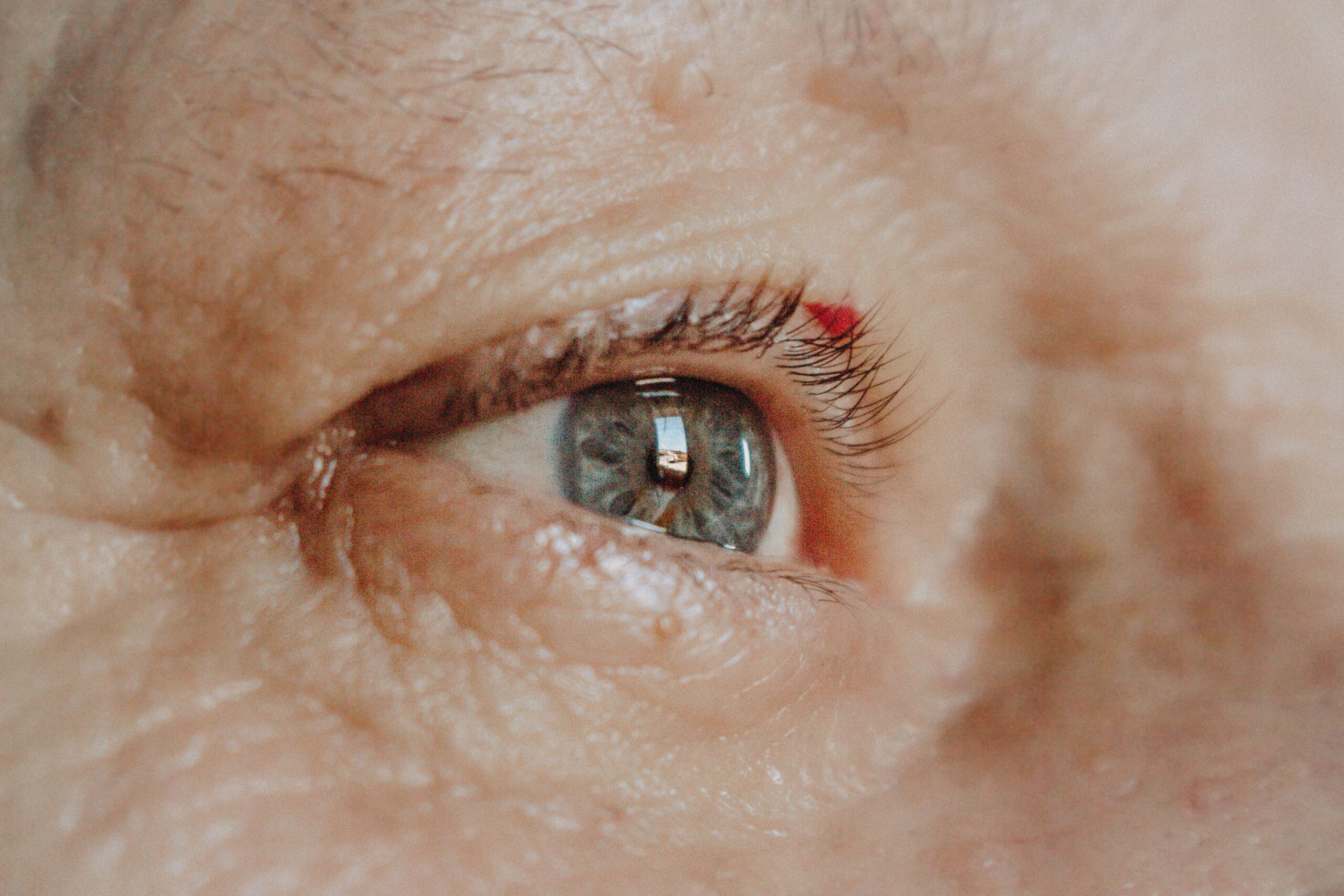

If you have found yourself holding your phone at arm’s length just to read a text, or giving up on small print altogether without moving it farther away, you are not alone. This is one of the most common and recognizable signs of presbyopia, a normal age-related change in the eye’s natural lens that affects virtually everyone beginning in their early to mid-40s.
We have covered presbyopia, including what causes it, how it progresses, and the full range of glasses and contact lens options, in our post When Do You Need Reading Glasses? Understanding Presbyopia. If you are newer to the topic, that is a good place to start.
This post is for people who already know they have presbyopia and are wondering whether there are options beyond reading glasses. The answer is yes, and the options have advanced considerably.
Why Glasses Are Not the Only Answer
Reading glasses, bifocals, and progressive lenses are effective and remain the most common way to manage presbyopia. But they are not the right fit for everyone. Some people find them inconvenient for an active lifestyle. Others are frustrated by constantly switching between pairs. And for patients who already wore glasses or contacts for distance vision, adding a near vision correction on top of that can feel like a step backward.
For these patients, surgical and procedure-based options offer a meaningful alternative. The right choice depends on your age, the overall health of your eyes, your prescription, and your lifestyle goals.
Monovision LASIK
LASIK is best known as a treatment for nearsightedness, farsightedness, and astigmatism in younger adults. For patients with presbyopia, a variation called monovision LASIK can reduce dependence on reading glasses by correcting one eye for distance and the other for near vision. The brain adapts over time to draw on whichever eye is most appropriate for the task at hand.
Monovision LASIK is generally a better fit for patients in their 40s who have early presbyopia and still have reasonably good corneal health. For patients in their 50s and beyond, or those with higher prescriptions, a lens-based approach tends to produce more reliable and lasting results. Because the cornea is not where presbyopia originates, corneal surgery addresses the symptom rather than the source of the problem.
Before committing to monovision LASIK, many eye doctors will have patients trial the concept with contact lenses first to make sure their brain adapts comfortably to the two-eye correction before pursuing a surgical solution.
Clear Lens Exchange / Refractive Lens Exchange (CLE/RLE)
For patients over 45, particularly those who are not ideal candidates for LASIK or who want a more comprehensive and permanent correction, Clear Lens Exchange (also called Refractive Lens Exchange or CLE/RLE) is often the most effective option.
The procedure is essentially the same as cataract surgery: the eye’s natural lens is removed and replaced with an advanced artificial intraocular lens (IOL). The key difference is that in CLE/RLE, the natural lens has not yet developed a cataract. It is being replaced because it has lost its flexibility due to presbyopia, which is where the problem begins.
According to the Cleveland Clinic, ideal candidates for refractive lens exchange are typically 40 or older, have presbyopia, and want to rely less on glasses or contacts. Because the artificial lens does not age the way the natural lens does, CLE/RLE also eliminates the possibility of developing cataracts in the future, making it a genuinely long-term solution for many patients.
Choosing the Right Lens for Your Lifestyle
One of the most important decisions in CLE/RLE is selecting the right intraocular lens. Several categories are available and each have different strengths.
Multifocal IOLs contain multiple zones of focusing power, providing clear vision at near, intermediate, and distance ranges. They are a strong choice for patients who want broad visual independence. Some patients experience glare or halos around lights, particularly at night, though this typically diminishes as the eye adapts.
Extended Depth of Focus (EDOF) IOLs create a continuous range of vision from distance through intermediate, with reduced dependence on glasses for most tasks. They tend to produce fewer visual disturbances than multifocal lenses, making them a good fit for patients who prioritize optical quality, particularly those who drive frequently at night.
Monofocal IOLs with monovision correct one eye for distance and the other for near, similar in concept to monovision LASIK but applied at the lens level. This approach avoids some of the optical side effects of multifocal lenses while still reducing dependence on glasses for many tasks.
The Light Adjustable Lens (LAL) is an advanced option that allows the prescription to be fine-tuned after surgery using a series of light-based adjustments. Horizon Eye Care was the first practice in Charlotte to offer this technology, giving patients a level of customization not possible with conventional IOLs.
No single lens is universally best. The right choice depends on your visual priorities, lifestyle, and the specific characteristics of your eyes. A thorough consultation with your surgeon is essential to making an informed decision.
Am I Too Old for LASIK? Too Young for Lens Surgery?
These are among the most common questions patients ask, and the answers are more nuanced than a simple age cutoff.
LASIK is generally most effective for patients under 45 who have stable prescriptions and adequate corneal thickness. As presbyopia advances through the 50s, the cornea remains structurally unchanged while the lens continues to harden, which is why lens-based surgery tends to offer a more durable result for older patients.
For CLE/RLE, most surgeons recommend the procedure for patients 45 and older. Younger patients who have their natural lens replaced lose the residual flexibility that lens may still provide. For patients over 50 who are already fully presbyopic, that tradeoff is less relevant.
The best way to determine which option is right for you is a comprehensive eye evaluation. Factors like corneal shape, pupil size, prescription, and eye health all influence which approach will deliver the best outcome for your specific situation.
You Have More Options Than You Think
If you are tired of reaching for reading glasses every time you pick up your phone, or if the juggling act of multiple pairs is affecting your daily life, there are real surgical options worth exploring. The technology available today is more advanced and more personalized than it has ever been.
Our team of fellowship-trained ophthalmologists at Horizon Eye Care provides comprehensive consultations for patients considering LASIK, CLE/RLE, and premium lens options across our Charlotte-area locations. We will help you understand which approach makes sense for your eyes, your lifestyle, and your long-term vision goals.