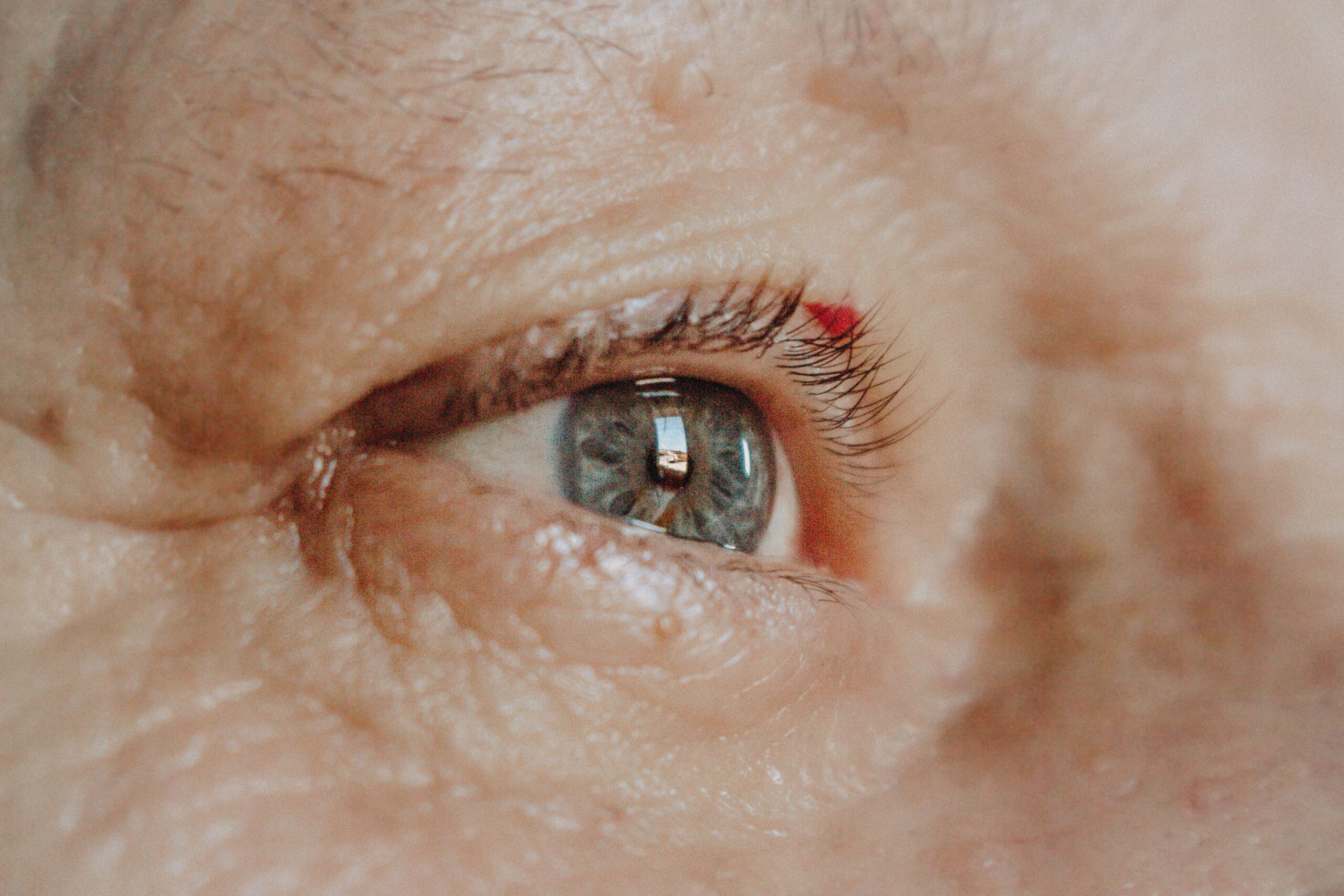


Most people experience light sensitivity at some point. Stepping out of a dark movie theater or sitting in bright sunlight without sunglasses can cause momentary discomfort. That kind of reaction is normal. The eye is simply adjusting to a change in light levels, and the feeling passes quickly.
Persistent or recurring sensitivity to light is different. Medically called photophobia, it describes a heightened intolerance to light that causes genuine discomfort or pain rather than just a brief squint. Photophobia isn’t a diagnosis as something else will be causing the symptoms, whether that’s dry eye, surface irritation, or inflammation inside the eye. Identifying that underlying cause is what determines how it’s treated.
How the Eye Processes Light
Understanding why sensitivity develops starts with how light travels through the eye. Light passes through several structures on its way in, from the tear film and cornea at the front, to the retina at the back. A problem at any point along that path can make normal brightness feel uncomfortable or painful.
The cornea and its surrounding nerve fibers are particularly important here. The cornea is one of the most densely innervated surfaces in the body. Any disruption to the corneal surface, whether from dryness, injury, or infection, activates these nerve fibers and can make even ordinary light levels feel overwhelming.
Dry Eye is The Most Common Culprit to Light Sensitivity
According to the Cleveland Clinic, dry eye is the most common condition associated with photophobia. When the tear film is thin, unstable, or poor in quality, the corneal surface becomes irregular and its nerve endings more exposed. Normally, the tear film protects nerve endings from the irritation of light. The cornea and tears combine to create a smooth, lubricated surface that is an important component in focusing light. When the tear film is inadequate or unstable, it is not as effective in focusing light properly, and the result can be sensitivity to light.
Many people with dry eye notice that light sensitivity worsens with screen use, in air-conditioned environments, or later in the day when the tear film has been further depleted. The sensitivity may come and go depending on conditions rather than being constant. Dry eye-related photophobia is very treatable, but it tends to persist without targeted care.
Corneal Causes
Because the cornea is so richly supplied with nerve fibers, any condition affecting its surface tends to produce significant light sensitivity.
Corneal abrasion is a scratch or scrape on the cornea’s surface, often caused by a foreign object, a fingernail, or improper contact lens wear. Signs and symptoms of a corneal abrasion include the feeling that something is in your eye, watery eyes, blurred vision, and sensitivity to light. Most minor abrasions heal within a few days with appropriate care, but contact lens wearers with abrasions should be evaluated promptly given the elevated risk of bacterial infection.
Keratitis is inflammation of the cornea, most commonly caused by infection. Early signs and symptoms include eye pain and redness, and according to the Cleveland Clinic, keratitis causes most cases of corneal blindness worldwide. Contact lens wearers are at elevated risk, particularly those who wear lenses longer than prescribed or sleep in them. Light sensitivity alongside eye pain and redness warrants same-day evaluation, not a wait-and-see approach.
Keratoconus, a progressive condition in which the cornea thins and bulges into a cone shape, can also produce photophobia. As the cornea’s curvature becomes irregular, it scatters incoming light rather than focusing it cleanly, creating glare and light sensitivity that worsen as the condition progresses.
Uveitis: Inflammation Inside the Eye
Uveitis is inflammation of the uvea, the middle layer of the eye that includes the iris, ciliary body, and choroid. The Mayo Clinic describes uveitis warning signs as coming on suddenly and worsening quickly, with symptoms including eye redness, light sensitivity, blurred vision, and dark floating spots.
The most common form, anterior uveitis (also called iritis), affects the iris and ciliary body at the front of the eye. The pain, redness, and photophobia associated with acute anterior uveitis typically develop rapidly over a few days. The light sensitivity associated with uveitis tends to be more pronounced than what dry eye produces, often making indoor lighting uncomfortable rather than just bright sunlight.
Uveitis can be serious, leading to permanent vision loss without prompt treatment. If you develop sudden eye pain alongside light sensitivity, evaluation by an ophthalmologist in Charlotte should not be delayed.
Retinal Conditions
Certain retinal conditions can also produce light sensitivity, though through different mechanisms than corneal and inflammatory causes. Retinitis pigmentosa, a group of inherited diseases causing progressive retinal breakdown, is commonly associated with photophobia, as are some other retinal dystrophies. Patients who experience new light sensitivity alongside floaters, flashes of light, or changes in peripheral vision should be evaluated promptly given the range of retinal conditions that can present this way.
After Eye Surgery
Light sensitivity following cataract surgery or LASIK is common and typically temporary. The eye’s surface and internal structures need time to settle after any surgical procedure, and heightened sensitivity during the healing period is expected. If sensitivity is severe, worsening rather than improving, or accompanied by pain or vision changes beyond the immediate post-operative period, contact your surgeon.
When Light Sensitivity Requires Urgent Care
Most photophobia has an identifiable and treatable cause. Seek care the same day if light sensitivity appears alongside:
- Significant eye pain, particularly pain that worsens when moving the eye
- Sudden vision changes or vision loss
- A red eye that developed quickly
- Floaters or flashes of light that are new or increasing
- Headache with fever and neck stiffness (seek emergency care immediately, as these can signal meningitis)
New or worsening light sensitivity, even without pain, is worth reporting to your Charlotte ophthalmologist. Photophobia that has been present for more than a few days without an obvious explanation, such as a recent corneal scratch or a known allergy flare, deserves a comprehensive eye exam. In many cases the cause is straightforward and highly manageable. Identifying it is the first step.